
Crisp County Sex Offender Checks
Use the Georgia Bureau of Investigation's public registry as the primary statewide source, then ask the Crisp County Sheriff's Office to examine a local discrepancy. GBI operates the central search while county sheriffs register and verify residents and send changes to the state. The central registry refreshes daily; sheriffs are expected to transmit additions and changes within two business days. That division matters when a recent move or correction is not yet visible.
A registry query is narrower than a criminal-history check. It identifies people subject to Georgia's registration law; it does not list every arrest, sex-related allegation, sealed matter, or criminal case. Begin with a last name or a Crisp County geographic filter, compare the live profile rather than an old screenshot, and call the sheriff at (229) 276-2600 if a Crisp address appears inaccurate.
Daily Updates and Crisp Verification
The local and state roles form a two-step verification chain. Crisp County collects and checks registration information; GBI publishes the statewide public record. If the question concerns whether a person properly reported a move, whether a listed address is current, or whether a local correction is pending, the sheriff is the practical first contact. Provide the exact profile, address, and reason for the concern. Do not approach the person or attempt an independent compliance check.
The GBI registry gateway explains the public system. Its captured gateway illustrates the official starting point:
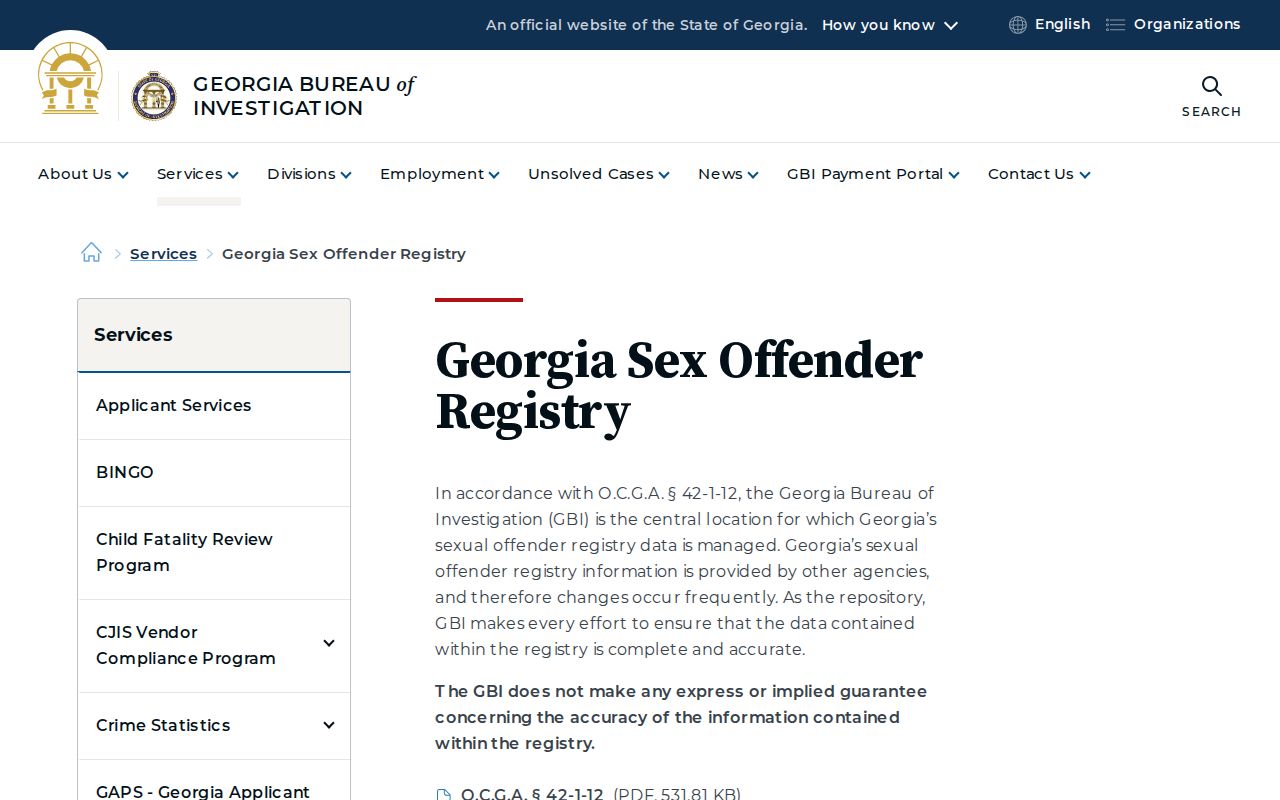
The gateway separates an official registry inquiry from unrelated criminal-record products and routes users toward current state data.
Georgia Sex Offender Registry Searches
Open the live GBI system and read its Conditions page before filtering. Search broadly enough to account for spelling and location changes, then narrow results through identity and geography rather than assuming the first similar name is the correct person.
- Open the official GBI registry and review the conditions governing accuracy and use.
- Choose a name search or a geographic search by address, city, ZIP, county, radius, or map.
- Start with the fewest reliable fields; add first name or location to narrow common results.
- Open a candidate profile and compare photograph, aliases, descriptors, offense, jurisdiction, and address.
- Report a specific Crisp County discrepancy to the sheriff instead of treating it as proven noncompliance.
| Field Label | Type | Required | Notes |
|---|---|---|---|
| Last name | Text | Search-dependent | Useful broad identity field |
| First name | Text | No | Narrows a surname result |
| Address / city / ZIP | Text | No | Supports geographic searching |
| County | Select | No | Choose Crisp for county results |
| Radius / map | Map | No | Reviews an area around a location |
The Conditions Page Is Part of the Search
GBI warns that registry information changes continuously, is supplied by other justice agencies, and carries no absolute accuracy warranty. Those conditions are substantive, not a disposable click-through. The official Conditions and search entry shows the live access point:
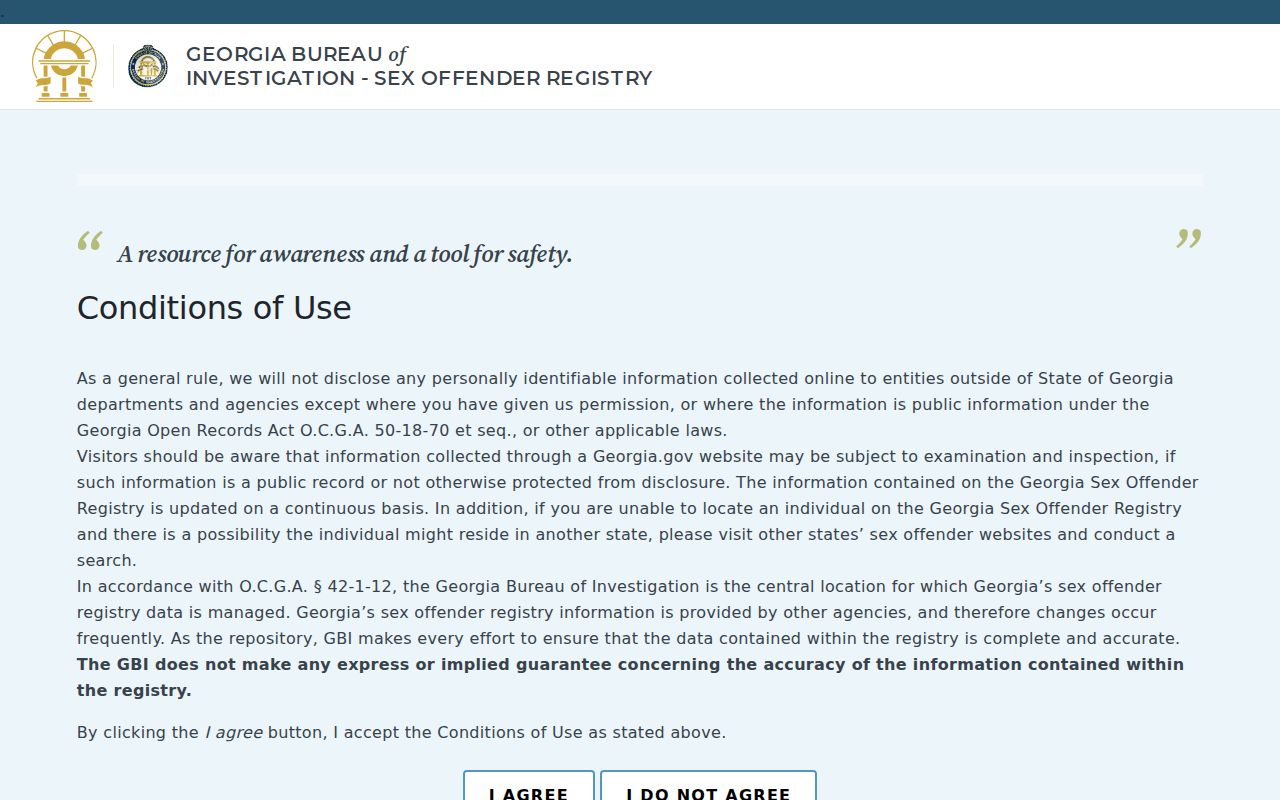
Read a result as a current agency record that still requires careful identity matching. A missing result does not prove a clear criminal history, and a displayed address should not be converted into an accusation without sheriff verification.
Crisp County Registry Profiles
A public profile can identify a registrant and explain the qualifying record, but it is not the complete prosecution file. Georgia statutes require collection of more information than every profile necessarily displays. Confirm the live interface before assuming a field is public.
| Name & Aliases | Published identity names used for matching |
|---|---|
| Photo & Physical Description | Photograph and descriptive characteristics |
| Registered Address | Public location information allowed by Georgia law |
| Offense & Jurisdiction | Qualifying offense, date, and originating jurisdiction |
| Classification | Level I, Level II, or sexually dangerous predator when assessed |
| Private Data | Victim identity, Social Security number, and fingerprints are not public profile fields |
NSOPW Adds the Cross-State Layer
Use the U.S. Department of Justice's National Sex Offender Public Website when the relevant address or person may cross state lines. NSOPW's official search queries participating jurisdictions:
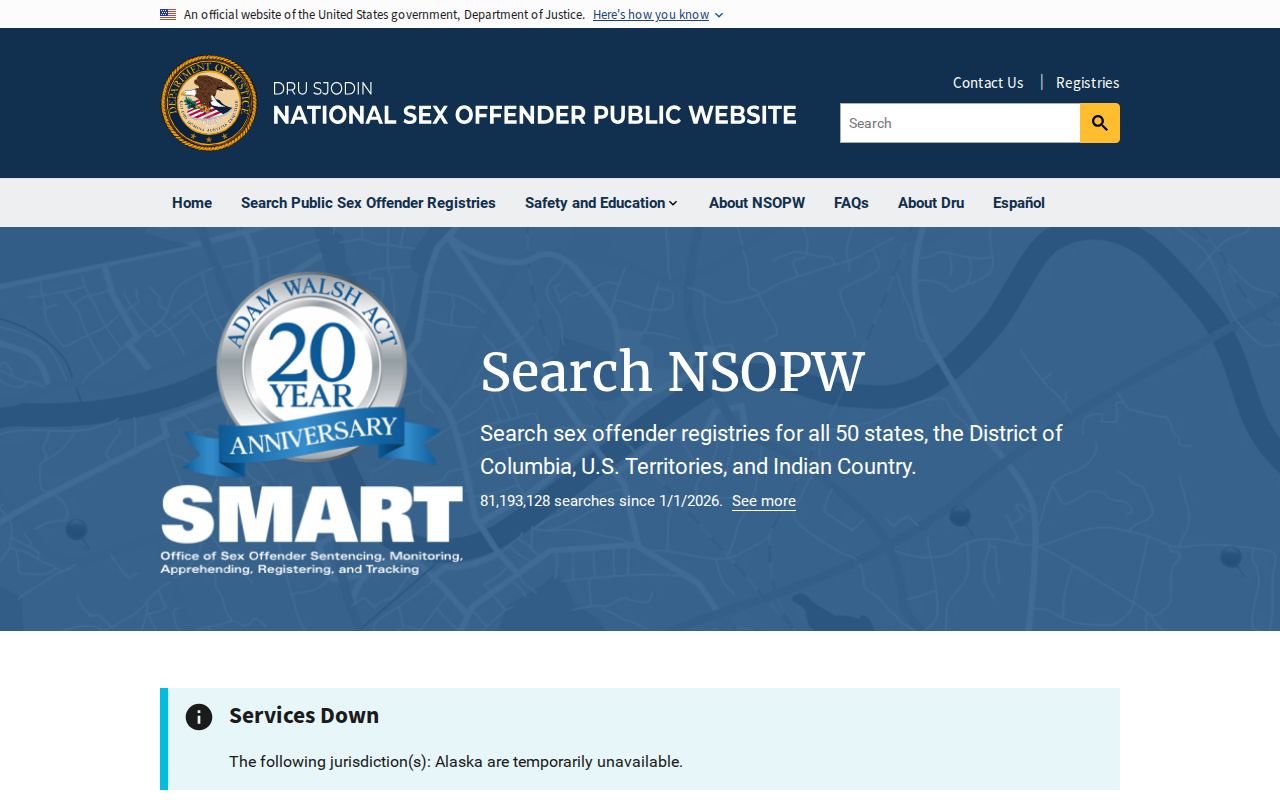
NSOPW is a meta-search, so the contributing jurisdiction remains authoritative. For a Crisp address, use it as a broader layer after the Georgia registry; for an out-of-state match, open the originating registry. National absence is not proof that no legal duty or criminal record exists.
Registration Levels and Duties in Georgia
Georgia uses Level I, Level II, and sexually dangerous predator risk assessments. These classifications must not be restated as the federal ten-year, twenty-five-year, and lifetime tier framework. Georgia's underlying registration duty is generally lifetime; statutory court relief is a separate analysis. Annual verification generally occurs during the 72 hours before the registrant's birthday and includes a new photograph and fingerprints.
| Level / Tier | Duration | Verification Frequency |
|---|---|---|
| Level I | Generally lifetime; relief is separate | Annual statutory verification |
| Level II | Generally lifetime; relief is separate | Annual statutory verification |
| Sexually dangerous predator | Generally lifetime | Enhanced statutory requirements apply |
Georgia Classification Is Not a Federal Tier
The GBI classification statute page provides the official Georgia framework:
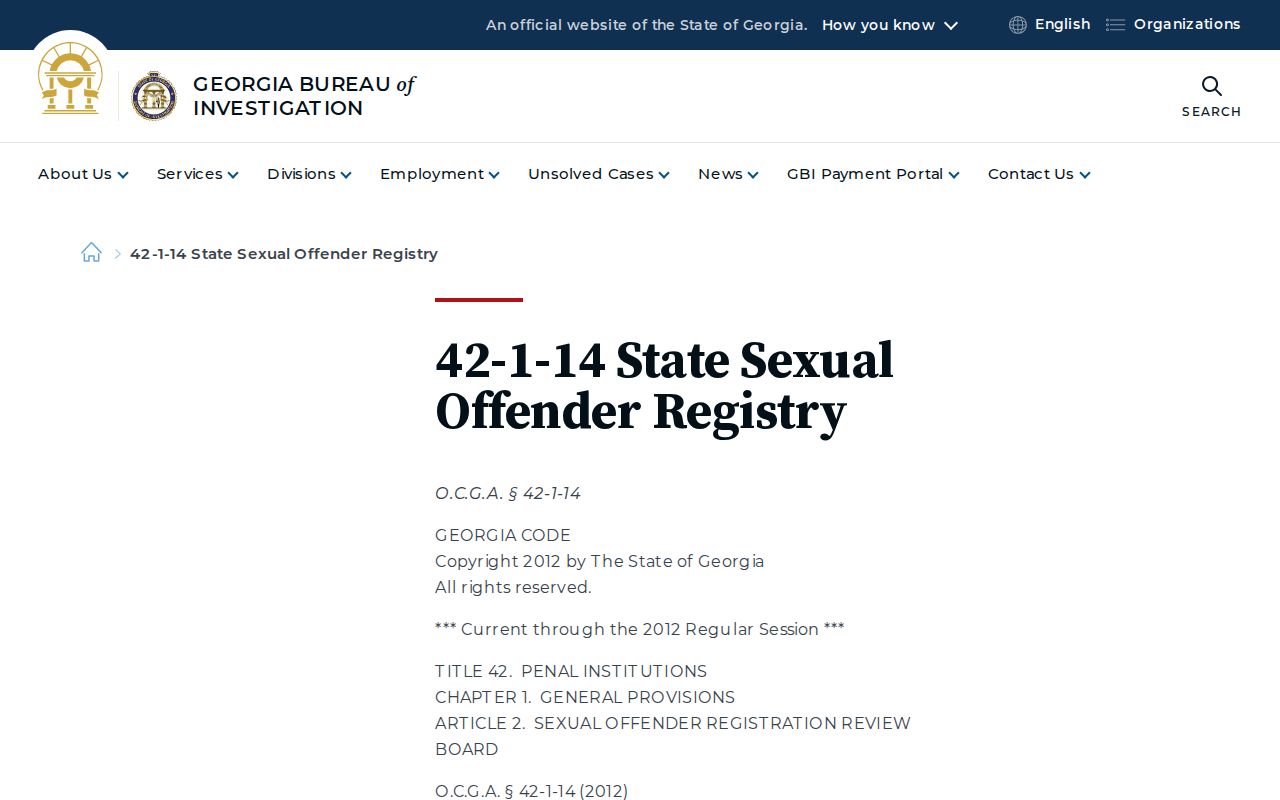
A level reflects Georgia's risk-assessment process, not a prediction that authorizes private action. Read classification beside the offense, jurisdiction, dates, and current status. Questions about the underlying judgment belong with the court that entered it, while local address and verification issues route to the Crisp County sheriff.
Move timing is also precise. Georgia law includes notice to old and new sheriffs before an address change, and entering Georgia can trigger a 72-hour duty. It should not be simplified into “three days after moving.” The public searcher should report a concrete discrepancy, not attempt to decide whether a violation occurred.
Using Registry Information Lawfully
Registry information is intended for lawful safety planning and community awareness. Review the official profile in context, distinguish a listed offense from current conduct, and use law-enforcement channels for concerns. Do not republish sensitive conclusions from a stale capture or treat geographic proximity as proof of danger.
For an immediate emergency, call 911. For a non-emergency Crisp County question, use the sheriff's published (229) 276-2600 line and identify the registry profile at issue. Preserve the distinction between requesting verification and reporting a suspected statutory violation: agency personnel decide what investigation is warranted. Screenshots may help identify what the user saw, but the live registry and the records held by the responsible agencies remain controlling. Community awareness works best when information is checked, reported through official channels, and never used as a basis for confrontation or vigilantism.
Misuse Warning: Using registry information to threaten, harass, intimidate, or commit a crime against a registrant or household is prohibited. Consult O.C.G.A. § 42-1-12 and report concerns through the Crisp County Sheriff's Office.
A Registry Profile Is Not a Court File
A registry result answers a registration question. It does not show every accusation, motion, hearing, plea, sentence term, appeal, or later order. For a Crisp County prosecution, contact the Clerk of Superior and Juvenile Courts, Criminal Division, at 510 North Seventh Street in Cordele, (229) 271-4726, during its published 8:30 a.m.–5:00 p.m. hours. The Georgia Courts e-access directory routes Crisp Superior records to account-gated PeachCourt.
The distinction also works in reverse: no registry match does not establish that a person has no arrest or conviction. Only qualifying sex-offender registrations appear. A criminal case file, GCIC history, jail booking, and registry listing are separate records created for different purposes and updated by different custodians.
The GBI registry FAQ addresses registration and eligibility questions:
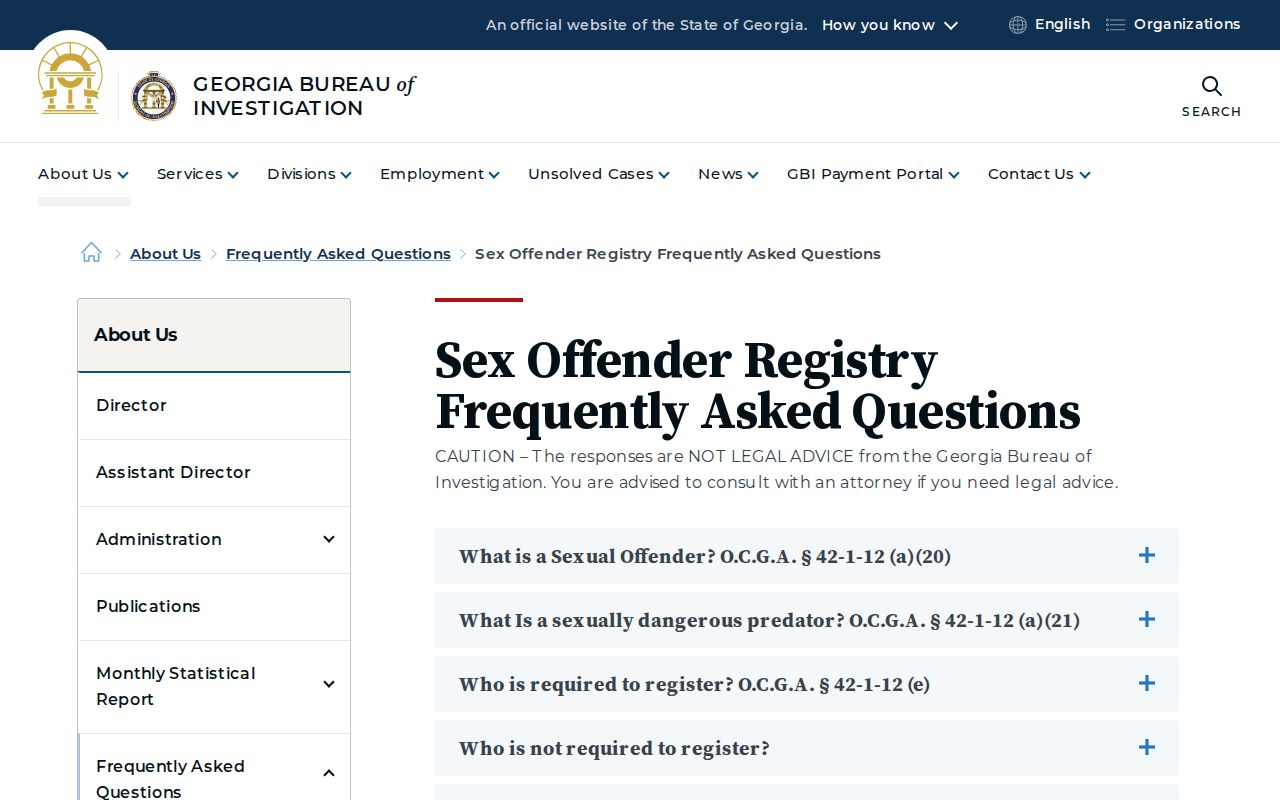
The FAQ supplies statewide context, while a case-specific legal question requires the judgment, current statute, and appropriate court or legal counsel.